Water has a way of becoming part of the background. We use it to make tea, rinse vegetables, wash clothes, and clean up after a busy day without giving it much thought. Then a kettle develops a thick layer of scale, a glass comes out of the dishwasher covered in spots, or the water from the kitchen tap starts tasting a little different. Suddenly, something so ordinary becomes a problem worth solving.
The thing is, water quality isn’t the same everywhere. Two homes on the same street can have different plumbing conditions, and water from a private well may present entirely different challenges from a municipal supply. Finding a useful solution starts with understanding those differences instead of buying the first product that promises to fix everything.
Start by Identifying the Actual Problem
Before investing in treatment equipment, take a moment to notice what’s happening around your property. White deposits on faucets often point toward hard water, while reddish stains may indicate iron. Sediment, unusual odors, and unpleasant tastes can have several causes, so it’s best not to jump to conclusions.
A water test provides a more reliable starting point. Depending on your water source, testing may examine hardness, pH, iron, dissolved solids, bacteria, or other substances relevant to local conditions. Municipal water customers can review their supplier’s water-quality report, while private well owners should follow testing recommendations appropriate to their location.
Testing also helps avoid unnecessary purchases. A household struggling with mineral scale may need a different solution from one concerned about a particular dissolved contaminant. And if the water already meets the household’s needs, adding several layers of equipment may offer little practical benefit.
Managing Scale Without Adding Unnecessary Complexity
Hard water can make ordinary cleaning feel like a never-ending chore. You scrub the shower glass, polish the faucet, and a few days later, those familiar white marks return. The deposits form as water evaporates and leaves behind minerals, mainly calcium and magnesium.
Conventional water softeners address hardness through ion exchange, replacing calcium and magnesium ions with sodium or potassium ions. This can reduce scale formation and help soap work more effectively. However, not every homeowner wants a traditional salt-based system, particularly when maintenance requirements, drainage, or sodium content are important considerations.
That is where sodium-free scale prevention may be worth exploring. Some conditioning technologies are designed to change how hardness minerals behave so they are less likely to form stubborn deposits on surfaces and inside equipment. These systems generally do not remove the hardness minerals in the same way a conventional softener does, so expectations should be realistic.
Performance varies by technology and water chemistry. Ask what the system is designed to accomplish, whether independent testing supports its claims, and how it performs under conditions similar to yours. If your main goal is reducing scale in a water heater or protecting plumbing fixtures, a conditioner may be worth comparing with a traditional softener. If you need genuinely softened water, the distinction matters.
Private Wells Need a More Individual Approach
Homes supplied by private wells have their own set of considerations. Groundwater can contain naturally occurring minerals, iron, manganese, or other substances, and its quality may change after heavy rain, flooding, nearby construction, or changes in land use. Unlike public water systems, private wells generally don’t receive the same routine monitoring on behalf of the household.
Effective well water treatment begins with testing rather than choosing equipment based on appearance alone. Clear water can still contain contaminants that cannot be detected by sight or smell. Depending on local risks, testing may include bacteria, nitrates, hardness, pH, iron, and other relevant substances.
Once the results are available, treatment can be selected to address the specific findings. Sediment filters capture particles, certain filtration media reduce iron or manganese, and ultraviolet systems may provide microbial disinfection when properly selected and installed. These technologies serve different purposes, and one cannot automatically replace another.
For example, a household dealing with orange stains might need to investigate iron levels before choosing a filter. If testing identifies bacterial contamination, a standard taste-improving cartridge will not make the water safe. In that situation, follow advice from the local health authority or a qualified water professional, and arrange the appropriate treatment and follow-up testing.
Well maintenance matters, too. Keep the wellhead protected, maintain the surrounding area, and retest according to local guidance or whenever a significant change raises concern.
Make Drinking Water Convenient at Home and Work
Water quality is only part of the picture. Convenience also affects how people use water throughout the day. At home, a family may want easy access to chilled drinking water without repeatedly filling pitchers. In an office, employees may prefer a dependable source of drinking water that doesn’t require storing and replacing large plastic bottles.
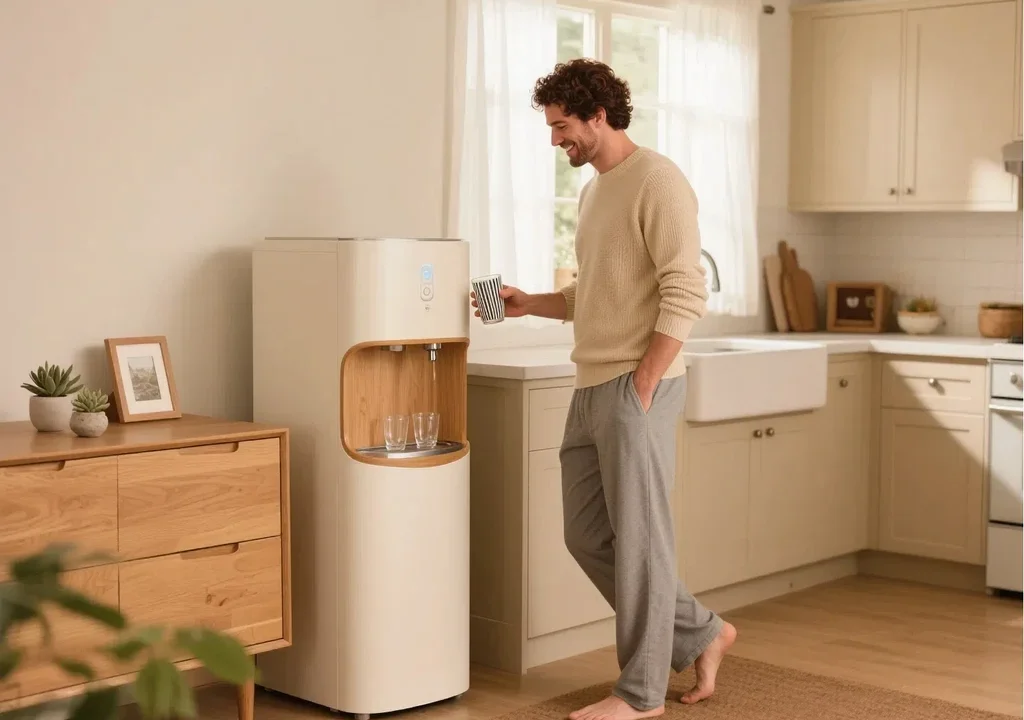
Bottleless water dispensers & coolers connect to a water line and use compatible filtration to provide drinking water on demand. Depending on the model, they may offer chilled, room-temperature, or hot water. Since they don’t rely on regular deliveries of large water bottles, they can also reduce storage needs and the handling involved in traditional bottled-water service.
The important detail is that a bottleless dispenser still needs a suitable water supply and the correct filtration for its intended use. The filter should be selected according to the incoming water quality and the manufacturer’s documented performance. A dispenser shouldn’t be assumed to remove every contaminant simply because it includes a filter.
Before choosing a unit, consider how many people will use it, how frequently water is dispensed, and whether the system can handle peak demand. A small office may have different requirements from a busy workplace or a large family home. Check installation needs, filter replacement costs, sanitation instructions, and service availability as well.
Maintenance Is What Keeps a System Useful
It’s easy to focus on the installation and forget about what happens afterward. Yet even a well-designed treatment system needs regular care. Filters have a limited service life, conditioning equipment may require periodic checks, and dispensers need cleaning according to the manufacturer’s instructions.
Keep track of filter changes and service appointments. If you notice a sudden change in taste, odor, water pressure, or scale buildup, don’t assume that replacing a cartridge will necessarily solve it. The cause may be a change in the water supply, a maintenance issue, or a problem that needs further testing.
For larger systems, ask the installer to explain which tasks you can handle yourself and which require professional service. Understanding the routine before you buy makes it easier to budget and prevents small maintenance jobs from being overlooked.
Choose What Works for Your Situation
Better water doesn’t always mean more equipment. Sometimes a simple filter is enough; sometimes a softener, specialized treatment system, or drinking-water dispenser makes more sense. The right answer depends on test results, household needs, water usage, and the time and money you’re prepared to spend on maintenance.
Ask clear questions, compare documented performance rather than marketing promises, and take the time to understand the trade-offs. A reliable solution should address a real concern and fit naturally into everyday life.
In the end, good water management is less about chasing a perfect product and more about making informed decisions. Start with the water you have, understand what needs improvement, and choose a system that can deliver the results you actually need. That’s a far better foundation for long-term comfort and confidence.