Water is one of those things most people don’t think about until something goes wrong. A strange smell from the kitchen tap, orange stains around the sink, cloudy water in a glass, or an unpleasant taste can quickly turn an ordinary household task into a frustrating experience. While these issues are often associated with well water, municipal supplies can also contain minerals, sediment, disinfectants, and other substances that affect water quality.
The good news is that water problems are usually manageable once their causes are properly identified. The key is choosing a treatment system based on what is actually present in the water, rather than buying equipment based on a general promise. Different contaminants require different solutions, and a system that works well for one issue may do very little for another.
Understanding Iron and Sulfur in Household Water
Iron is a common concern in private well water. It may appear as reddish-brown stains on sinks, toilets, bathtubs, and laundry. In some cases, the water looks clear when it first comes from the tap but develops a metallic taste or leaves discoloration after sitting for a while. Iron can also create an environment where certain bacteria grow inside plumbing and treatment equipment.
Sulfur-related problems are usually easier to recognize because of their smell. Hydrogen sulfide, often described as having a rotten-egg odor, can make water unpleasant for drinking, cooking, bathing, and even brushing teeth. The smell may come from the water itself or from chemical reactions inside a water heater.
Although iron and sulfur are separate concerns, they sometimes appear together. That is why testing matters. A professional water analysis can help determine the concentration of iron, sulfur, manganese, pH, hardness, and other factors that influence which treatment approach will work best.
Why Testing Should Come Before Buying Equipment
It’s tempting to search online for a filter that promises to solve every water problem. However, water chemistry is rarely that simple. Iron can exist in different forms, and the treatment required may depend on whether it is dissolved, oxidized, or attached to sediment. Sulfur odor can also have more than one source.
A proper water test provides a clearer picture of the problem. It can identify whether the water contains iron, hydrogen sulfide, manganese, bacteria, hardness minerals, or other contaminants. Testing may also reveal whether the water is acidic, which can affect plumbing, fixtures, and the performance of certain filtration systems.
Instead of guessing, homeowners can use these results to select equipment that matches their water conditions. This often saves money in the long run because an unsuitable filter may need to be replaced, upgraded, or supplemented with another system.
How Iron and Sulfur Filters Work
For households dealing with staining, metallic taste, or sulfur odors, iron & sulfur filters can be an important part of a complete water treatment plan. These systems are designed to reduce specific iron and sulfur compounds, often by using oxidation, filtration media, air injection, or other treatment methods.
The right technology depends on the water test. Some systems introduce oxygen into the water to convert dissolved contaminants into particles that can then be captured by a filter. Other systems use specialized media that react with or trap iron and sulfur compounds. In certain situations, chemical injection may be recommended, especially when contaminant levels are high or the water chemistry is complicated.
Maintenance is an important part of the process. Filters may require backwashing, media replacement, cleaning, or periodic inspections. A system that is correctly sized and regularly serviced is more likely to provide consistent results than one that is installed and forgotten.
The Role of UV Water Treatment
Not every water problem is caused by minerals or unpleasant odors. Private wells may also face microbiological concerns, including bacteria and other microorganisms. These risks are different from iron and sulfur issues and require a different kind of solution.
UV water filtration uses ultraviolet light to inactivate many microorganisms as water passes through a treatment chamber. It does not generally remove sediment, hardness, iron, or chemical contaminants, but it can be useful as a disinfection step when microbiological treatment is needed.
For UV systems to work effectively, the water usually needs to be relatively clear. Sediment, cloudiness, and certain minerals can interfere with the light and reduce its ability to reach microorganisms. That is why a UV unit is often installed after pre-filtration. Depending on the water conditions, a treatment setup may include sediment filtration, carbon filtration, iron removal, and UV disinfection in a carefully planned sequence.
UV lamps also require regular replacement, and the quartz sleeve should be inspected and cleaned when necessary. Without maintenance, the system may not perform as expected.
Why Whole-House Filtration Can Make Daily Life Easier
Point-of-use filters, such as those attached to a kitchen faucet or installed beneath a sink, can improve the water used for drinking and cooking. But they do not address every tap in the home. If the concern involves shower water, laundry, bathroom fixtures, or water entering the home, a broader approach may be more suitable.
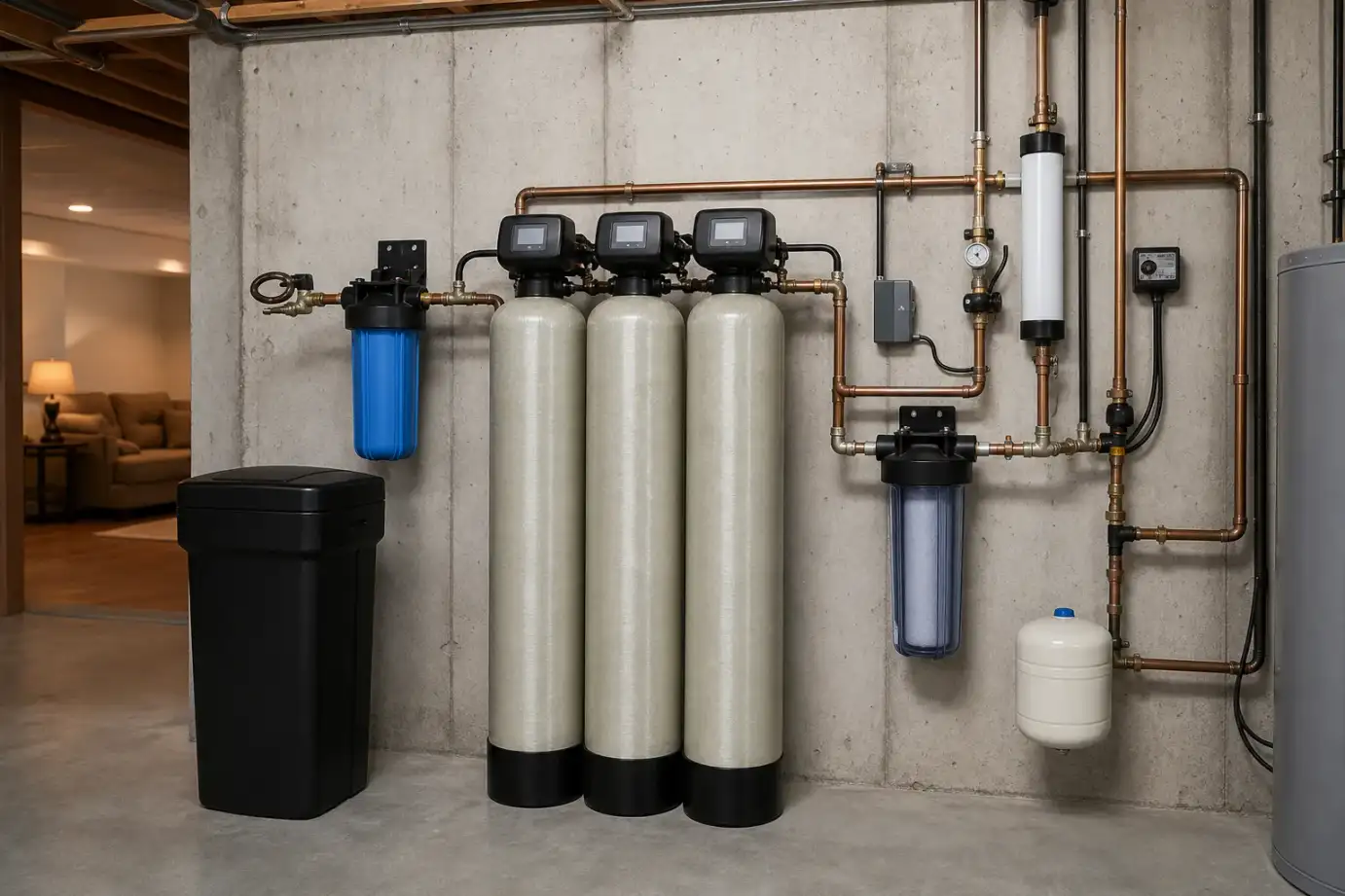
A whole house water filtration system treats water at the main entry point before it travels through the plumbing. This means treated water can reach showers, sinks, washing machines, toilets, and other fixtures. Depending on the system design, whole-house treatment may help reduce sediment, chlorine taste and odor, certain chemicals, iron, sulfur, or other targeted contaminants.
The exact equipment should still be selected according to test results. A carbon filter may be useful for chlorine and taste concerns, while a specialized iron filter may be necessary for mineral staining. In homes with multiple water issues, several treatment stages may be combined rather than relying on one universal filter.
Choosing a System That Fits Your Home
Several practical details should be considered before installing a water treatment system. First, determine the size of the household and the typical water demand. A system that works for a small family may not be suitable for a larger home with several bathrooms.
Water pressure, plumbing configuration, available installation space, and drainage access also matter. Some systems need electricity, a drain connection, or regular backwashing. Others may require salt, replacement media, or periodic chemical replenishment.
Homeowners should also ask about installation, warranties, service availability, replacement parts, and long-term maintenance costs. The initial purchase price is only one part of the investment. A slightly more expensive system may be easier to maintain and more dependable over time, while a low-cost unit may become expensive if it requires frequent repairs or does not solve the original problem.
A Better Approach to Cleaner, More Reliable Water
Water treatment is not about choosing the most complicated system. It is about understanding the water and applying the right solution. Iron and sulfur may require specialized filtration, microbial concerns may call for UV disinfection, and broader household problems may benefit from whole-house treatment.
Start with testing, review the results with a qualified water treatment professional, and choose equipment based on actual water conditions. With the right plan and consistent maintenance, homeowners can reduce unpleasant odors, prevent staining, protect plumbing, and enjoy water that feels cleaner and more dependable every day.