My neighbor and I bought basically the same water softener within a few months of each other, same brand, same model, practically identical setups on paper. Yet a year later, hers was humming along fine and mine was already acting sluggish, regenerating at weird times, not quite doing the job it used to. Same equipment, wildly different experience. That bugged me enough to actually dig into why.
Turns out the answer wasn’t really about the equipment at all. It came down to how each system got put in in the first place, a detail I hadn’t given nearly enough weight to when I was originally shopping around. I’d focused entirely on brand and features, completely overlooking the installation itself as a variable that could make or break the whole thing.
The Detail I Completely Overlooked
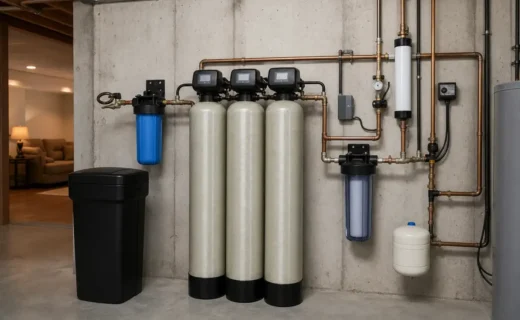
When I finally had someone come look at mine, the diagnosis wasn’t some mysterious internal failure — it was a handful of smaller issues stemming from how the unit had originally been set up. Bypass valve positioned awkwardly, drain line with a slight upward slope it shouldn’t have had, water pressure never properly checked or adjusted during the original install. None of these on their own seemed catastrophic, but together they were quietly sabotaging the whole system.
A system that’s properly installed accounts for all these small details from day one — correct valve placement, appropriate drain routing, pressure regulation matched to the unit’s specifications. My neighbor’s installer apparently checked every one of these boxes. Mine, evidently, rushed through a few of them, and I was the one paying for it a year later in the form of a softener that just wasn’t doing its job right anymore.
Watching the Actual Difference Play Out
Once my system got corrected — valve repositioned, drain line fixed, pressure properly regulated — the change was honestly kind of dramatic compared to how things had been running. Regeneration cycles started happening on a predictable schedule instead of randomly. Salt usage evened out instead of fluctuating in ways I never understood. Water actually felt consistently soft again, instead of that weird in-between state I’d been quietly tolerating for months without fully registering how off it had become.
This drove home something I hadn’t really internalized before — system performance isn’t just about the equipment specs printed on the box. It’s just as much about whether everything’s calibrated and configured correctly for your specific home and water conditions. Two identical units, installed differently, can perform in genuinely different ways, which is exactly what my neighbor and I ended up demonstrating completely by accident.
The Long-Term Cost I Hadn’t Considered
Here’s the part that actually worried me a bit once I understood it. My technician mentioned that running a system with these kinds of installation issues for an extended period doesn’t just hurt short-term performance — it can meaningfully shorten how long the whole unit lasts. Components working harder than necessary, valves under improper stress, resin beads wearing down faster because regeneration cycles weren’t timed correctly.
Getting things corrected early probably saved my system lifespan from taking a real hit down the road. He mentioned some poorly installed units end up needing replacement years before they should, purely because of accumulated stress from day-one setup issues nobody caught in time. That’s a genuinely expensive lesson to learn the hard way, and I felt fairly lucky I caught mine before it turned into a bigger problem requiring a full replacement instead of a relatively simple correction.
What I’d Tell Anyone Shopping for One of These
Looking back at this whole saga, my biggest takeaway isn’t really about brands or models at all — it’s that the installation matters just as much, maybe more, than the equipment itself. I spent weeks researching which unit to buy and basically zero time thinking about who’d actually be putting it in or how carefully they’d do it.
If you’re in the market for a system yourself, don’t make the mistake I did. Ask questions about the installation process itself, not just the product specs. Find out how thoroughly they check pressure, valve placement, drain routing, all those unglamorous details that don’t show up on a spec sheet but end up mattering enormously down the line. My neighbor and I own the same machine. Only one of us got the version that actually works the way it’s supposed to.